 Gonzalo TéllezOVER Collab Hub
OVER Collab Hub
A network where extended reality creators find teams and projects, designed to give the platform room to grow.
View prototype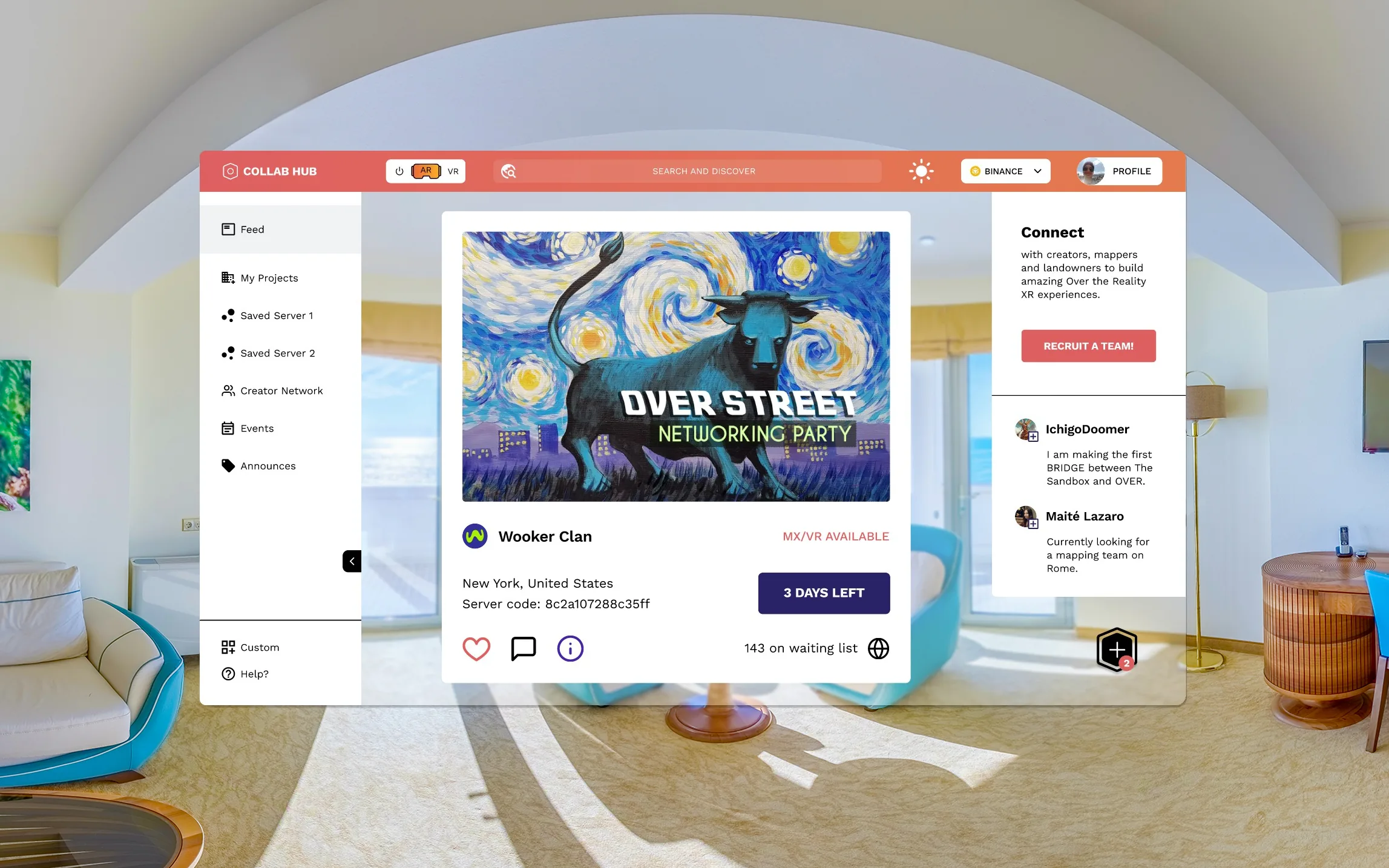
A world divided into hexagons
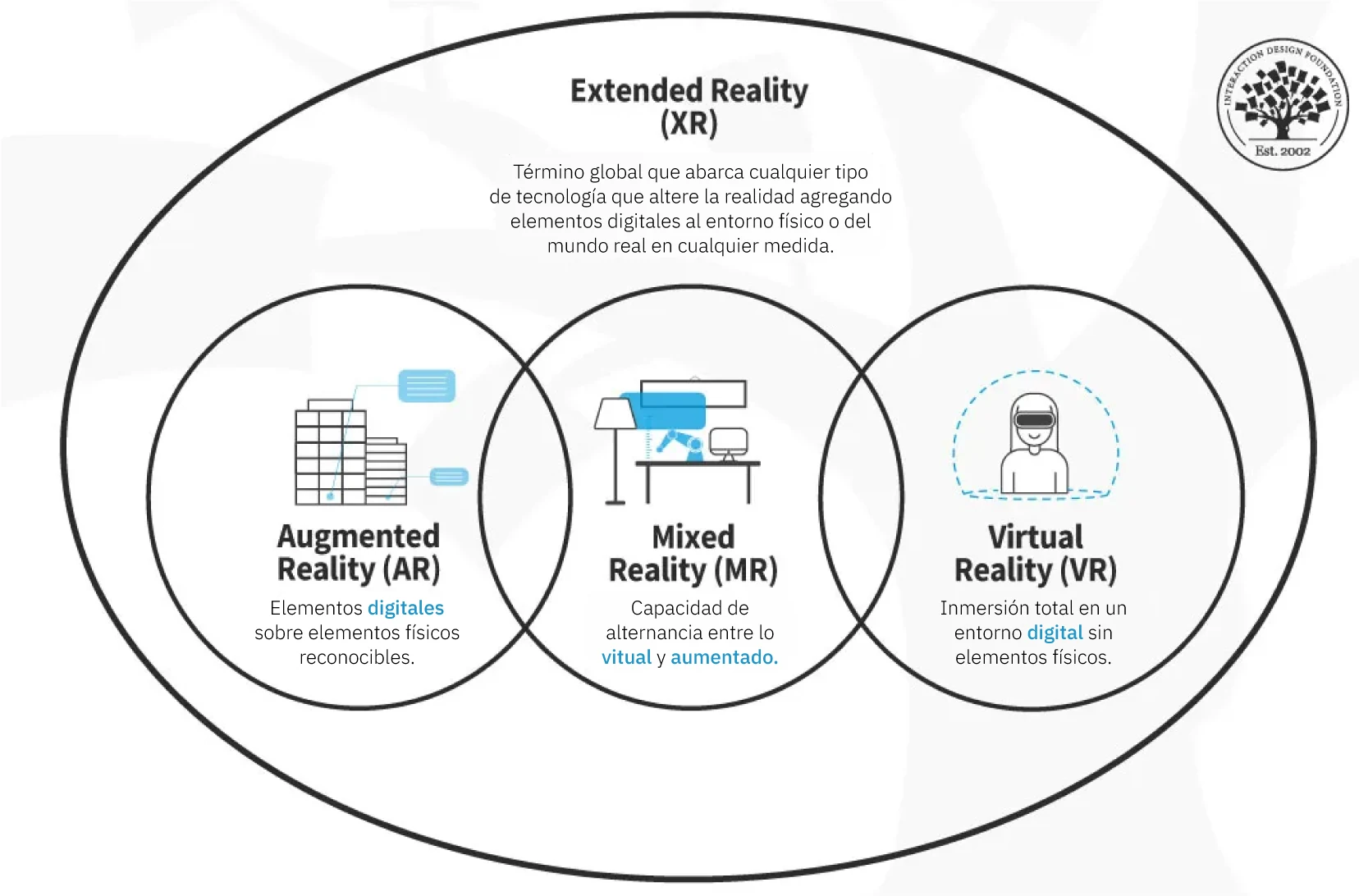
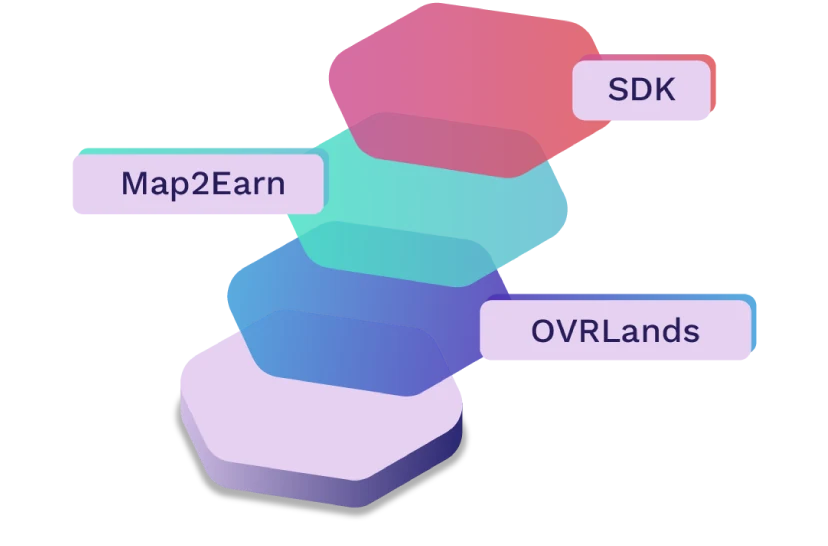
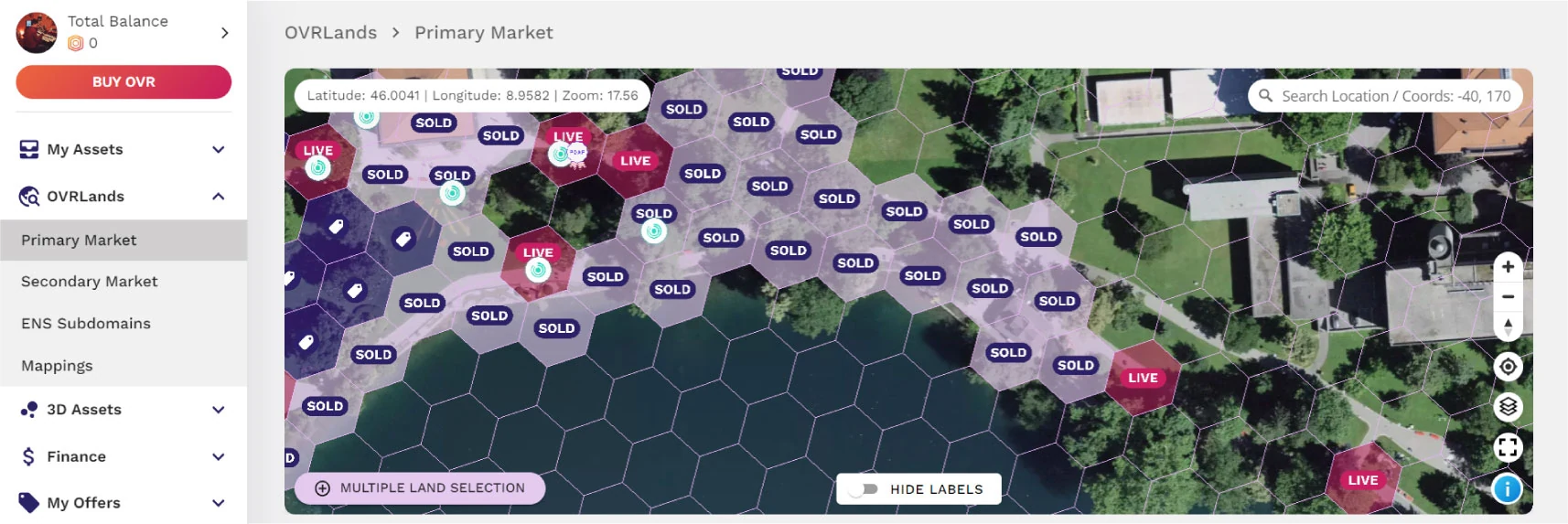
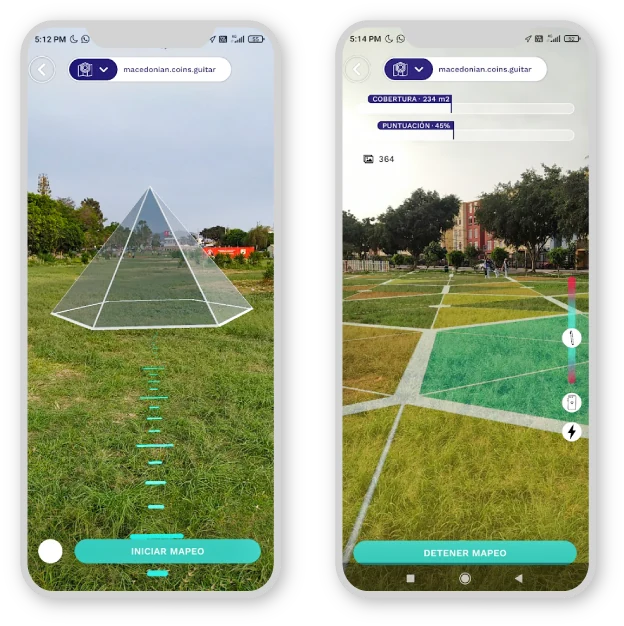
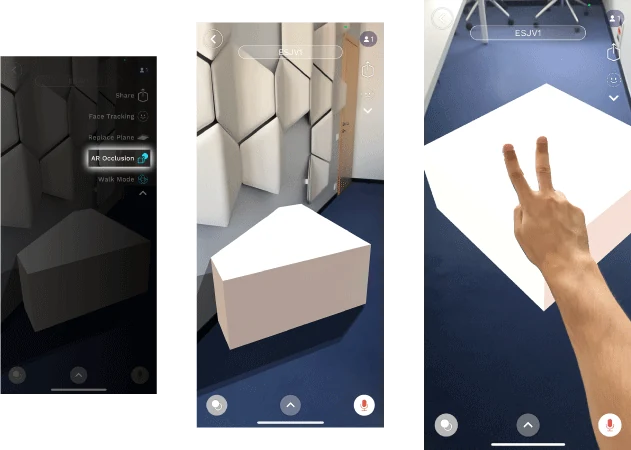
OVER is a geolocated extended reality platform built on Ethereum and Polygon. It divided the world into 300 m² hexagons, the OVRLands, sold as NFTs. It works in three layers: land ownership, a 3D map of the world built by the community, and an SDK for creators to publish AR, VR and MR experiences.
Without creators, land is worthless
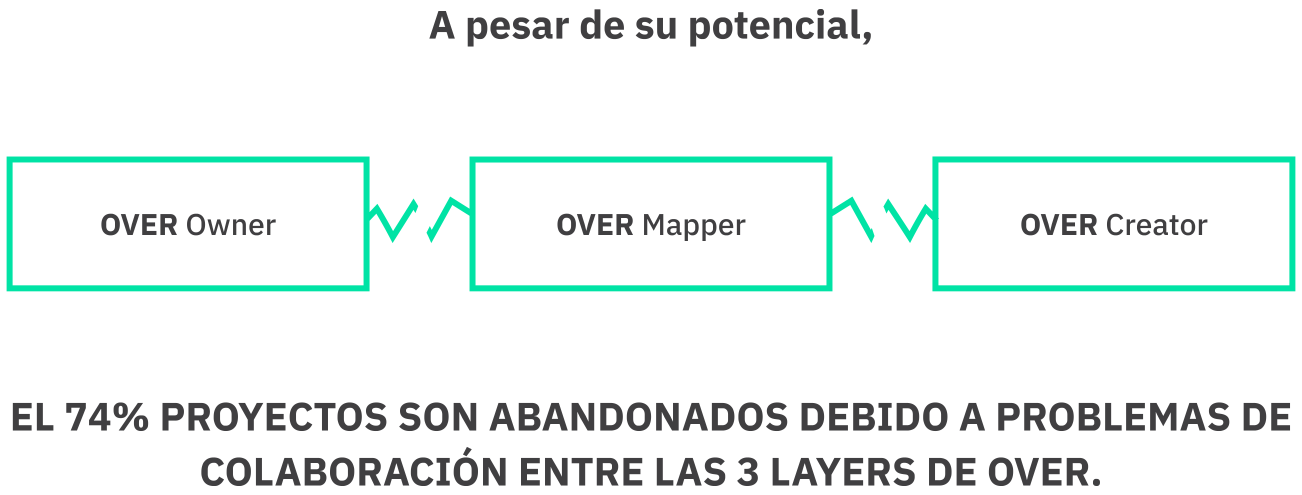
A land's value depends on what gets built on it, and that depends on creators. But creators had nowhere to meet, form teams or find commissions. Without experiences, land loses its appeal; without a creative community, there are no experiences.
From creator to validated prototype
A small team: research and QA, graphic design and a product advisor. I designed the experience and the interface, and shared the research and testing.
- 01We studied the market and the community before drawing anything.
Team research, platform data and feedback from Discord and Telegram, set against what Apple Vision Pro and Meta were preparing.
- 02We chose a priority user: the creator.
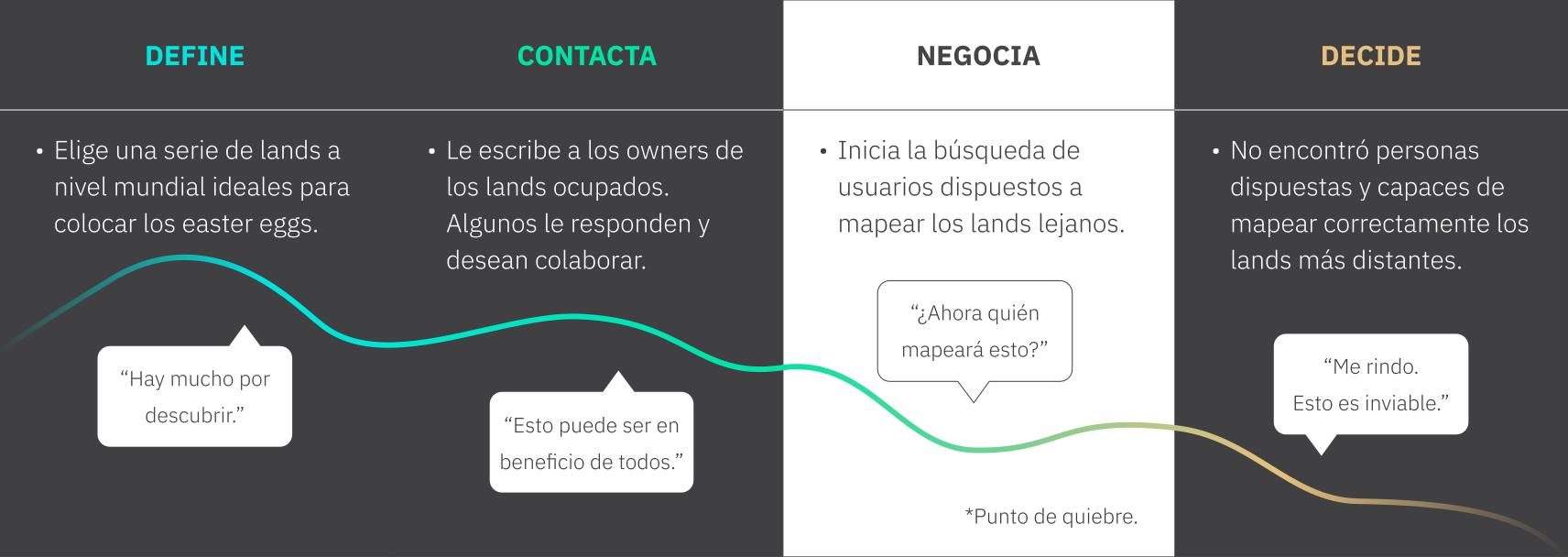
We defined their profile and journey through a concrete case: a creator who wants to launch gamified mixed reality activations and needs land, partners and brands.
- 03We proposed Collab Hub and narrowed the scope.
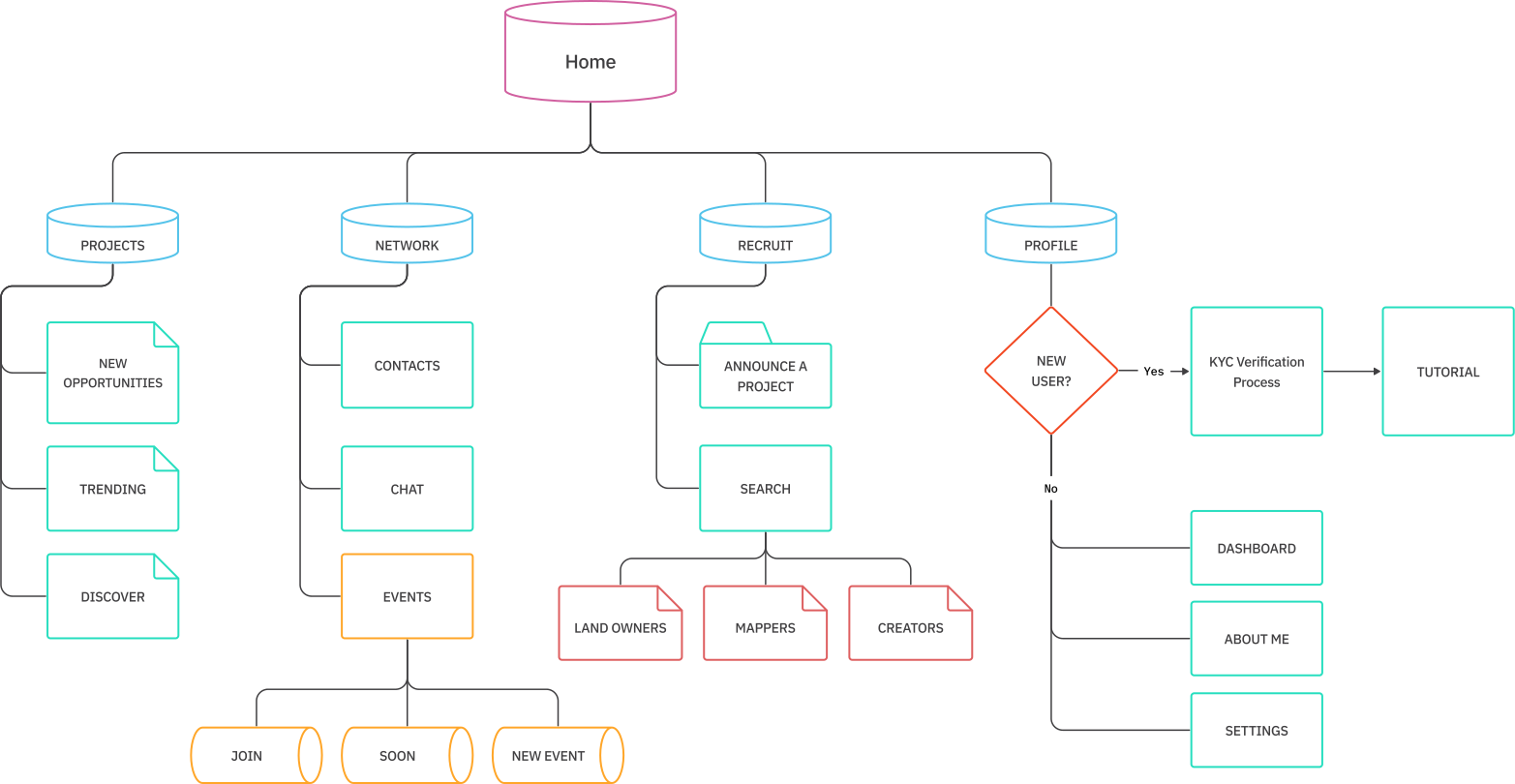
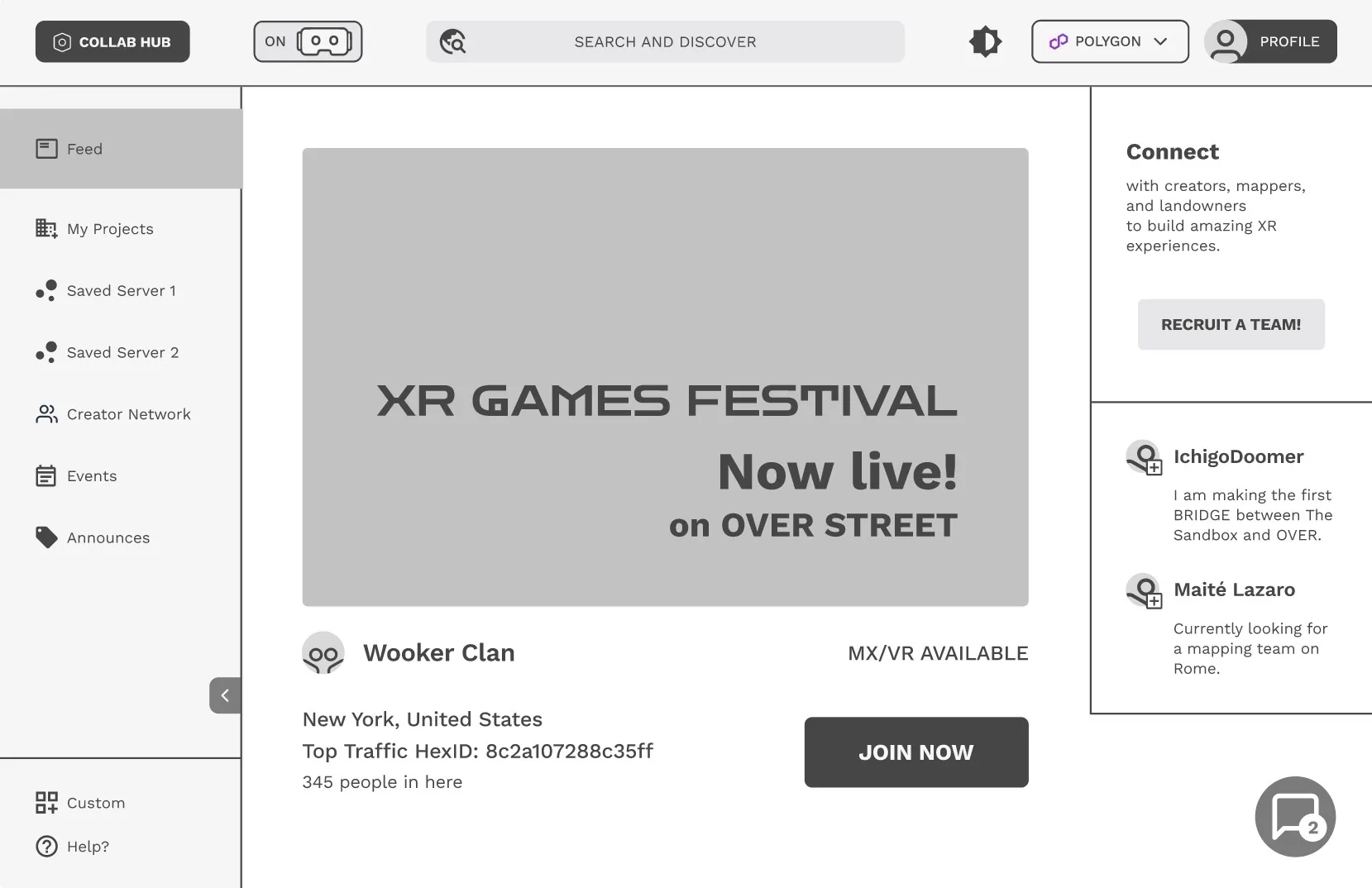
A network where verified creators post open calls, recruit teams and promote events. The first deliverable was the web app's project feed, with an architecture ready for AR and VR.
- 04I designed the interface and its base system.
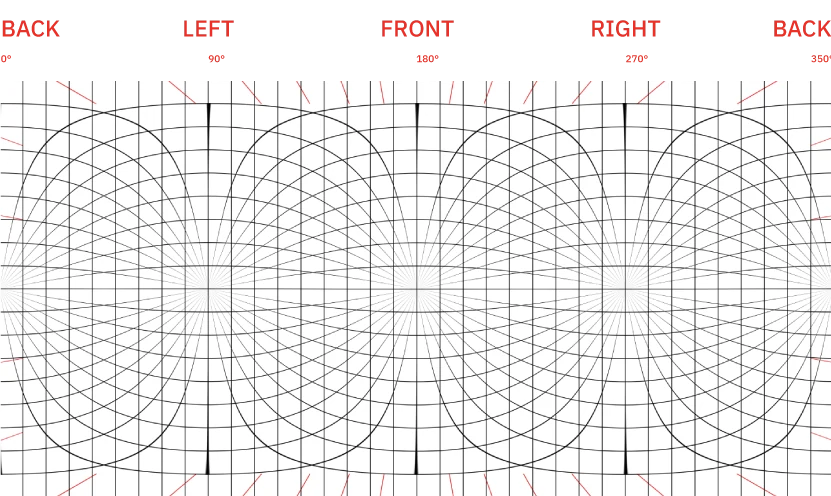
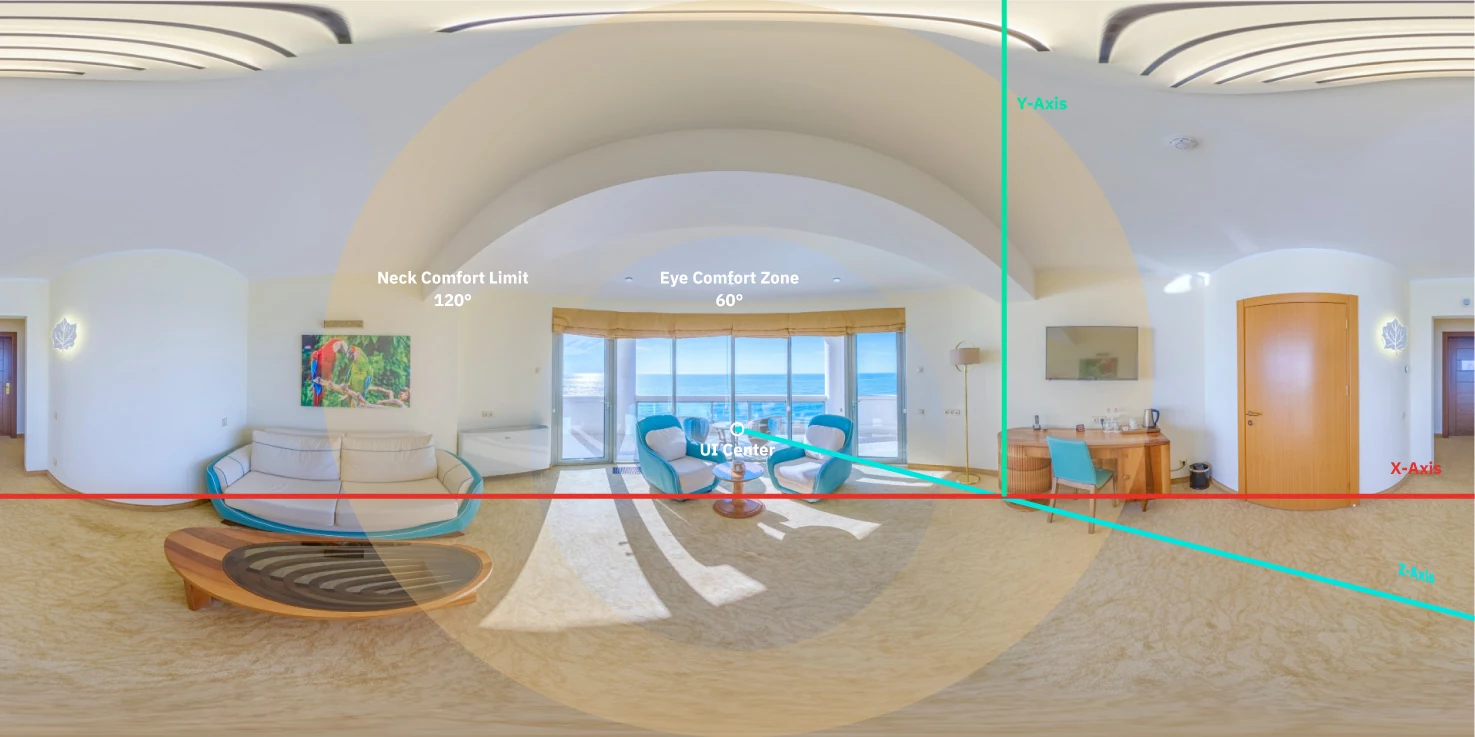
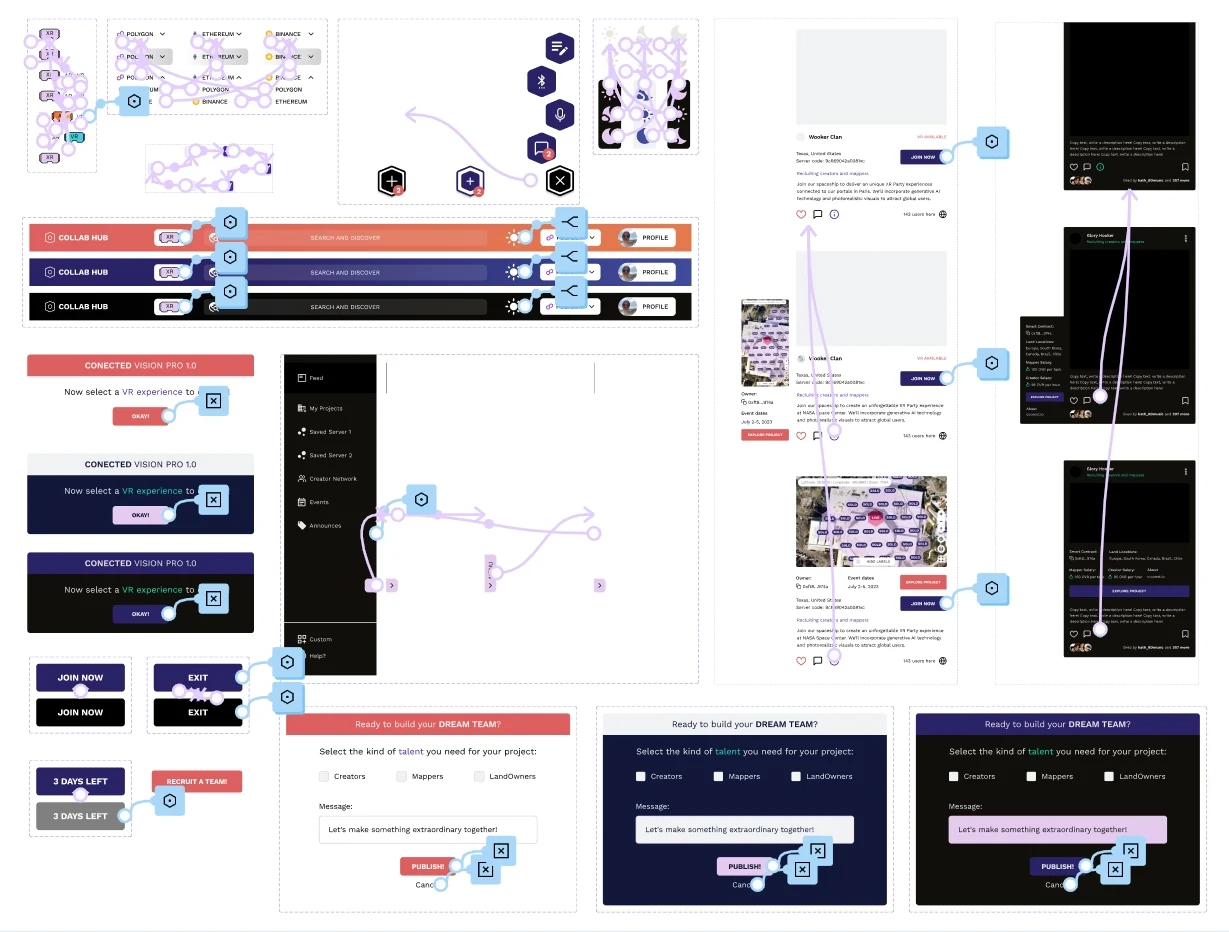
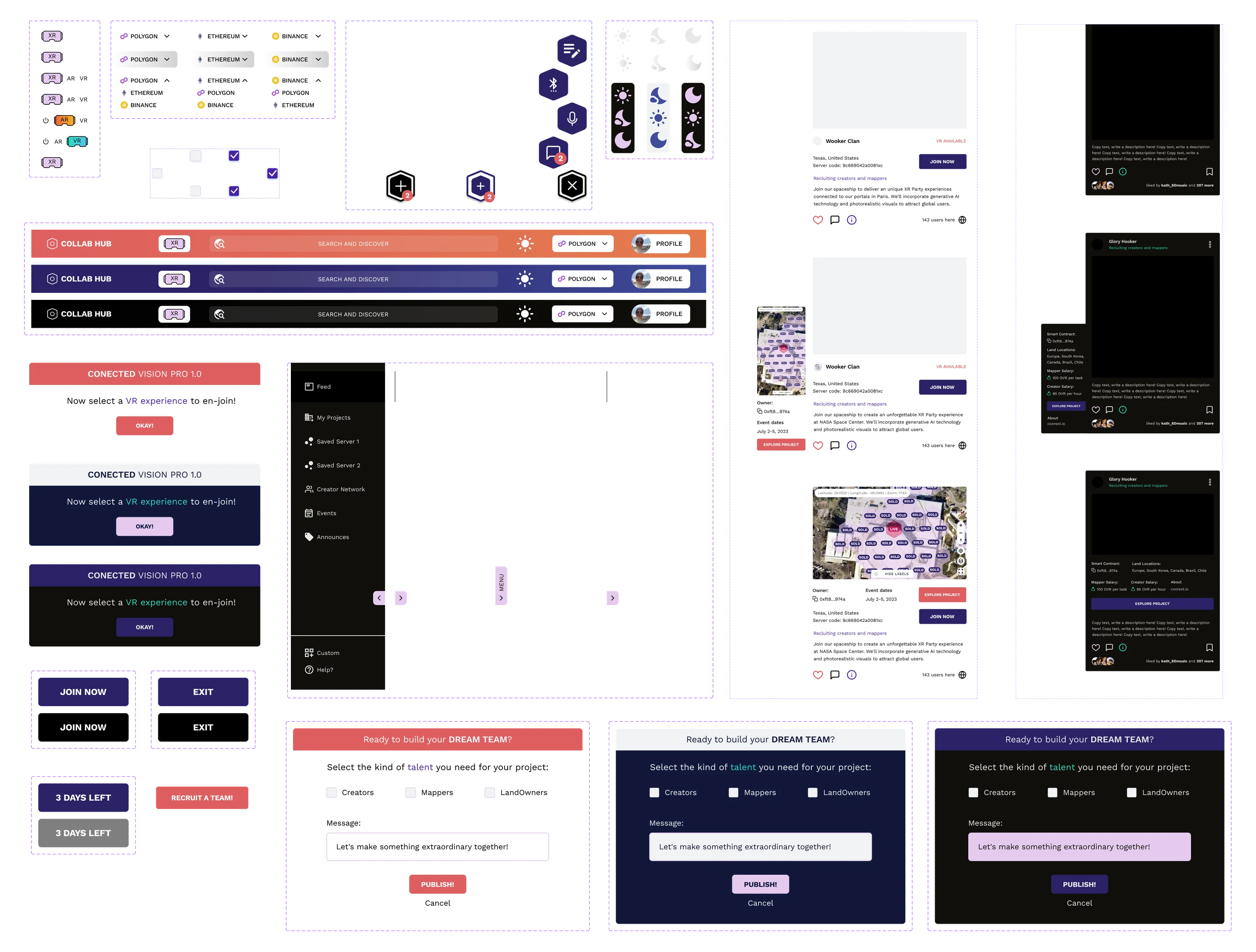
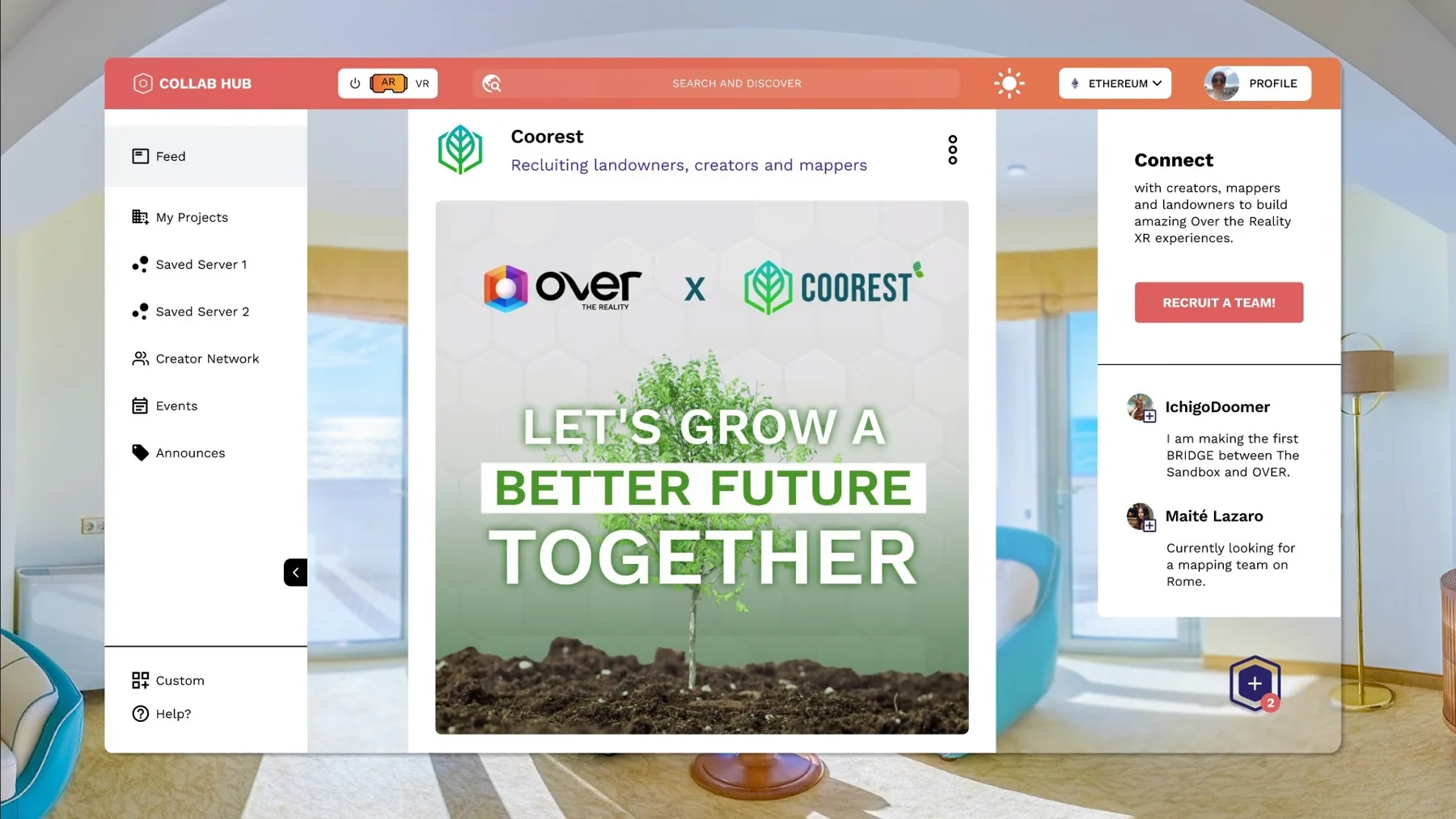
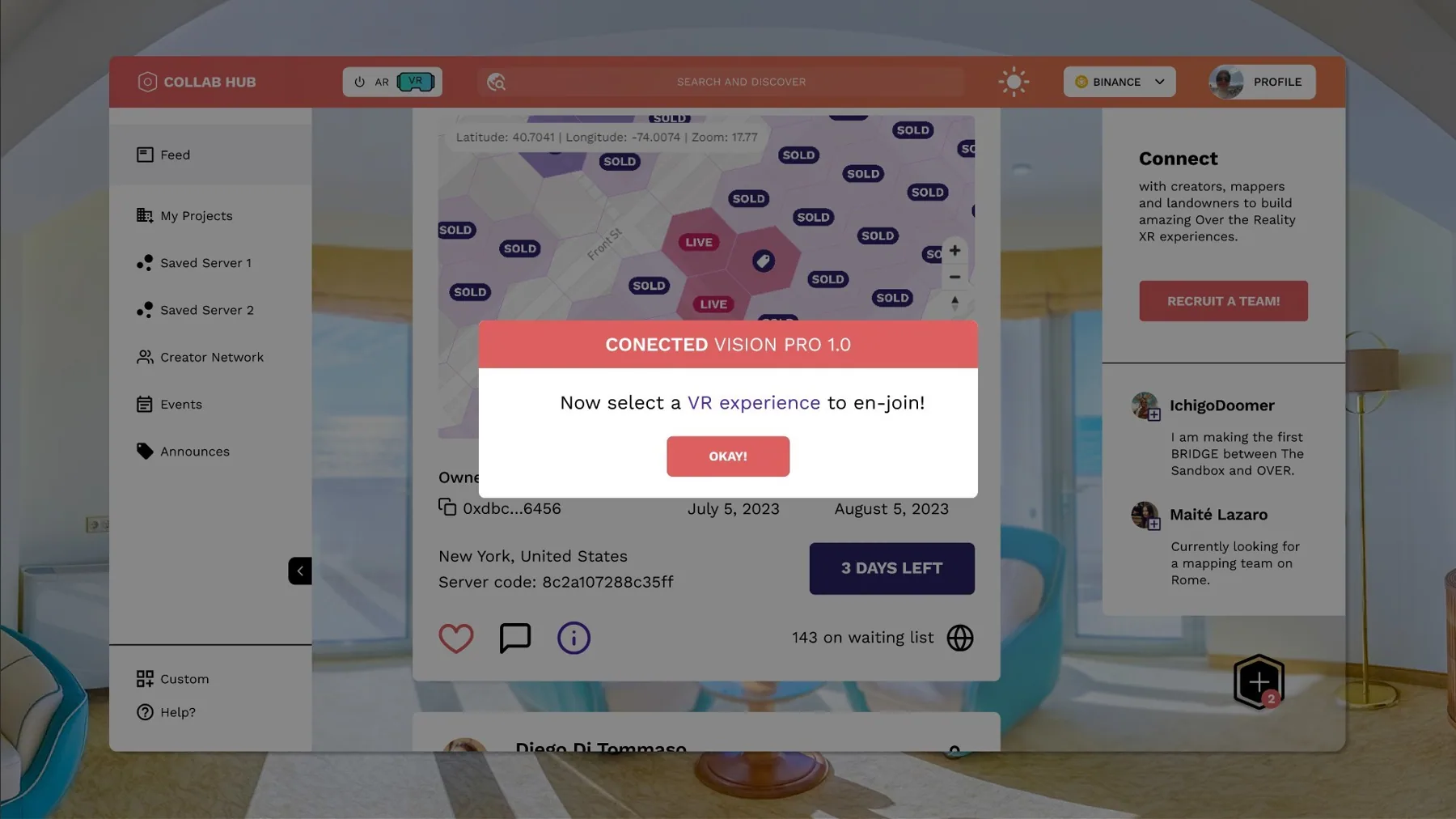
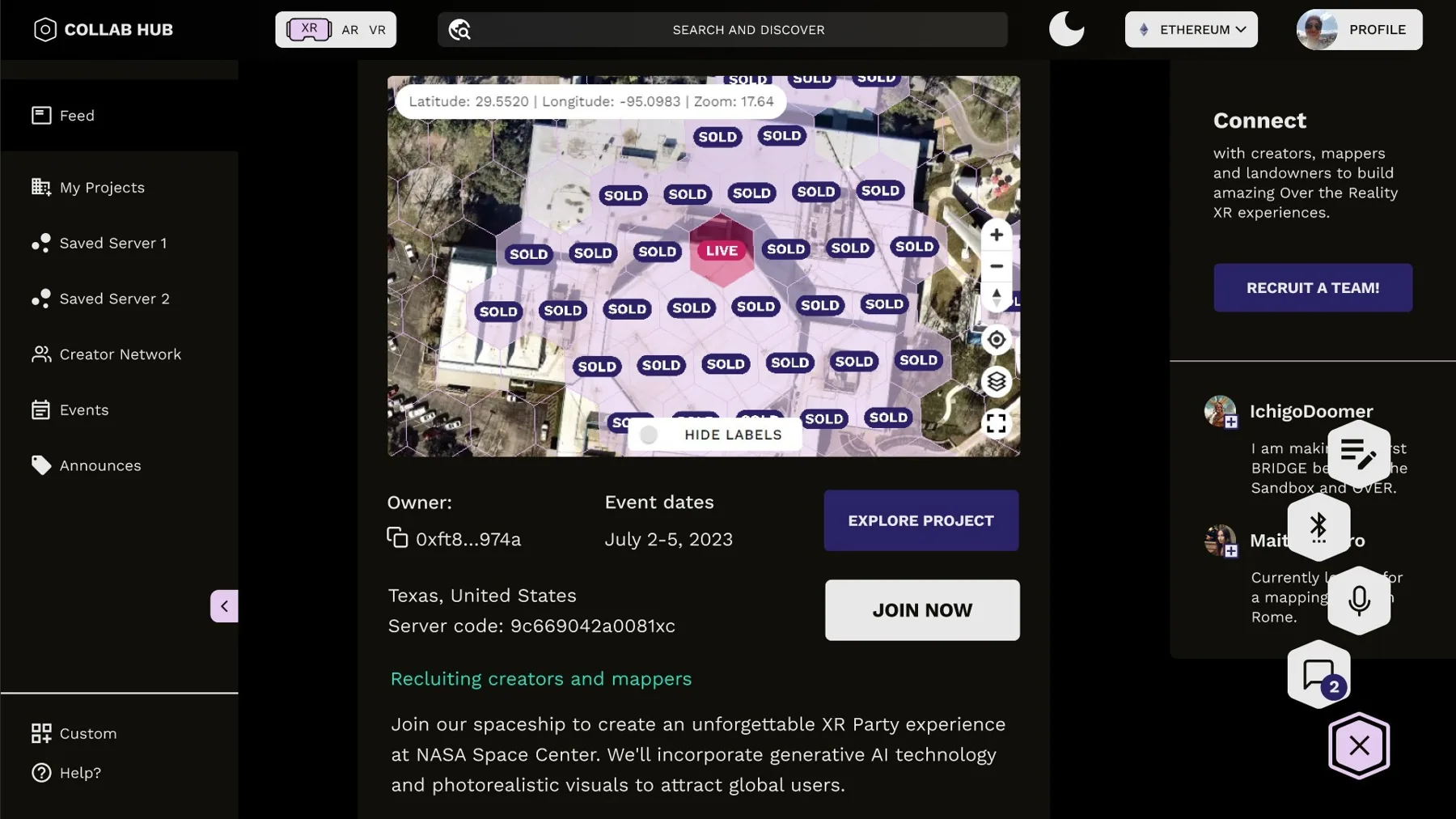
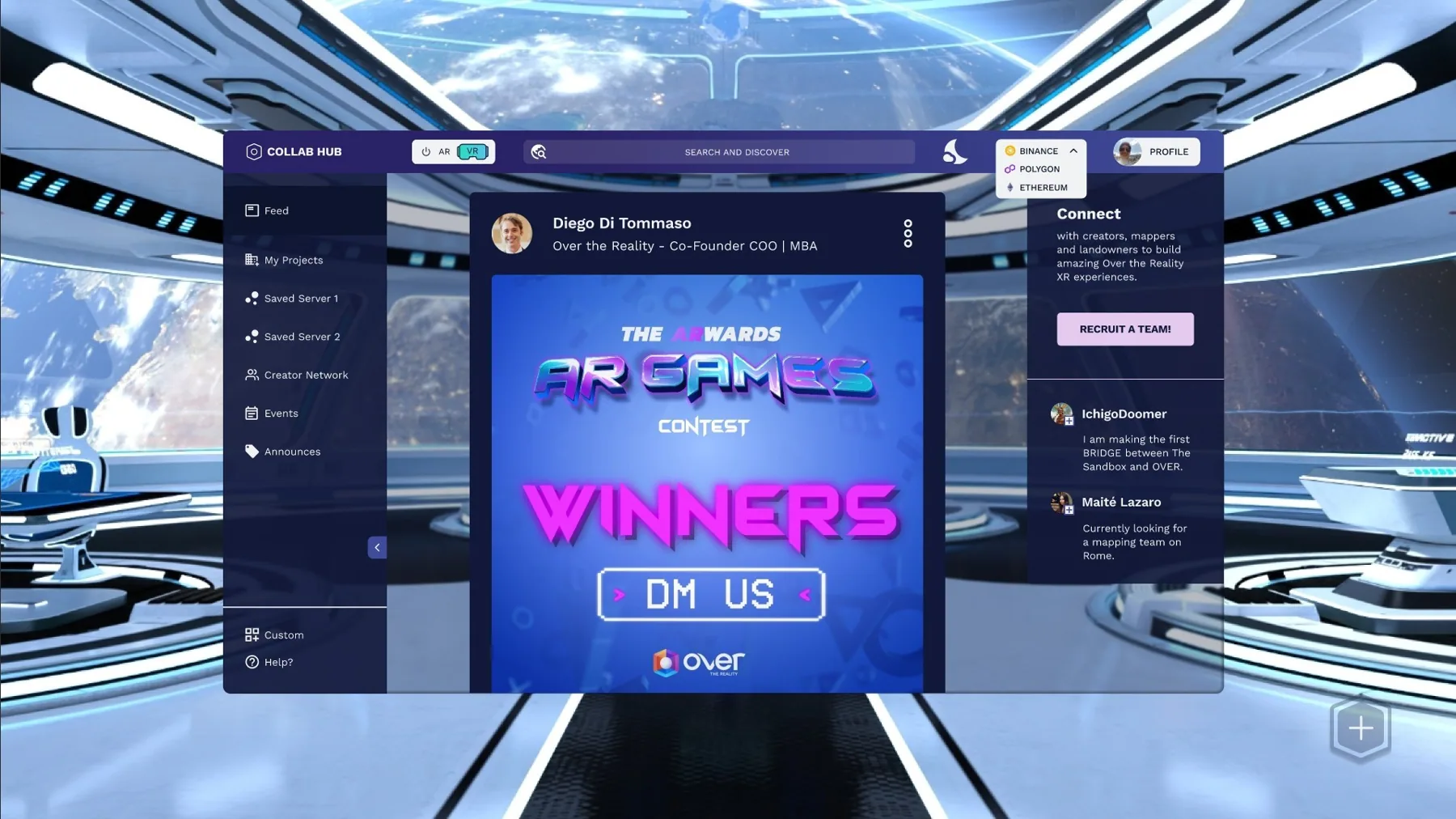
An AR and VR immersion button, three color modes, Web3 network switching, team recruiting pop-ups and a 360 simulation in Figma.
- 05We validated with the community.
Usability tests in Maze with the most active Discord and Telegram members. Their feedback went into the final prototype.
Against the competition
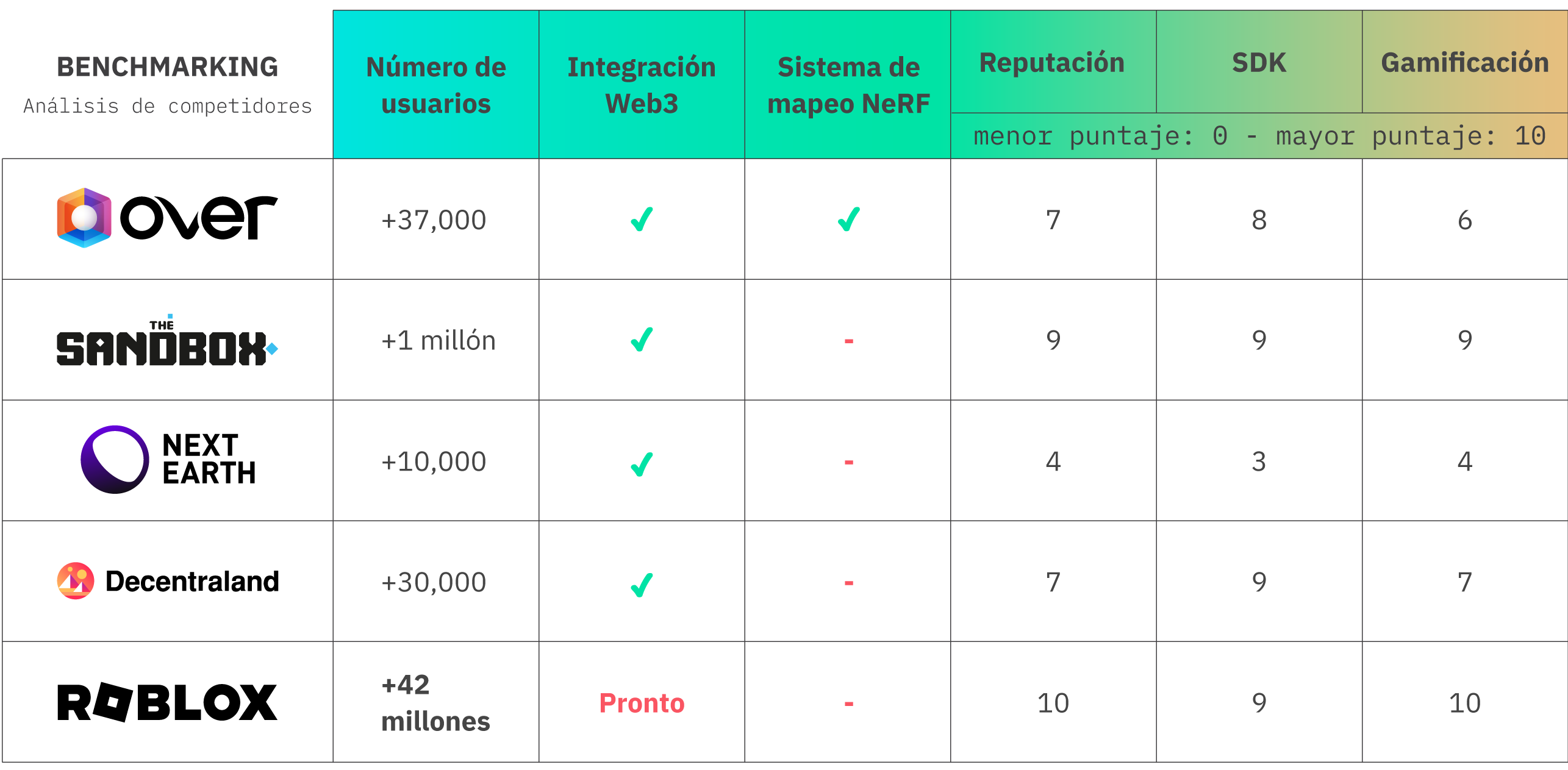
We compared users, Web3 integration, maps, reputation, SDK and gamification across the main metaverses.
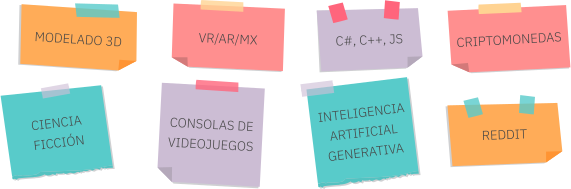
David, our priority user
As creative expression and as a service for metaverse brands.
Doesn't know where to start or which technologies are worth learning.
Collab Hub
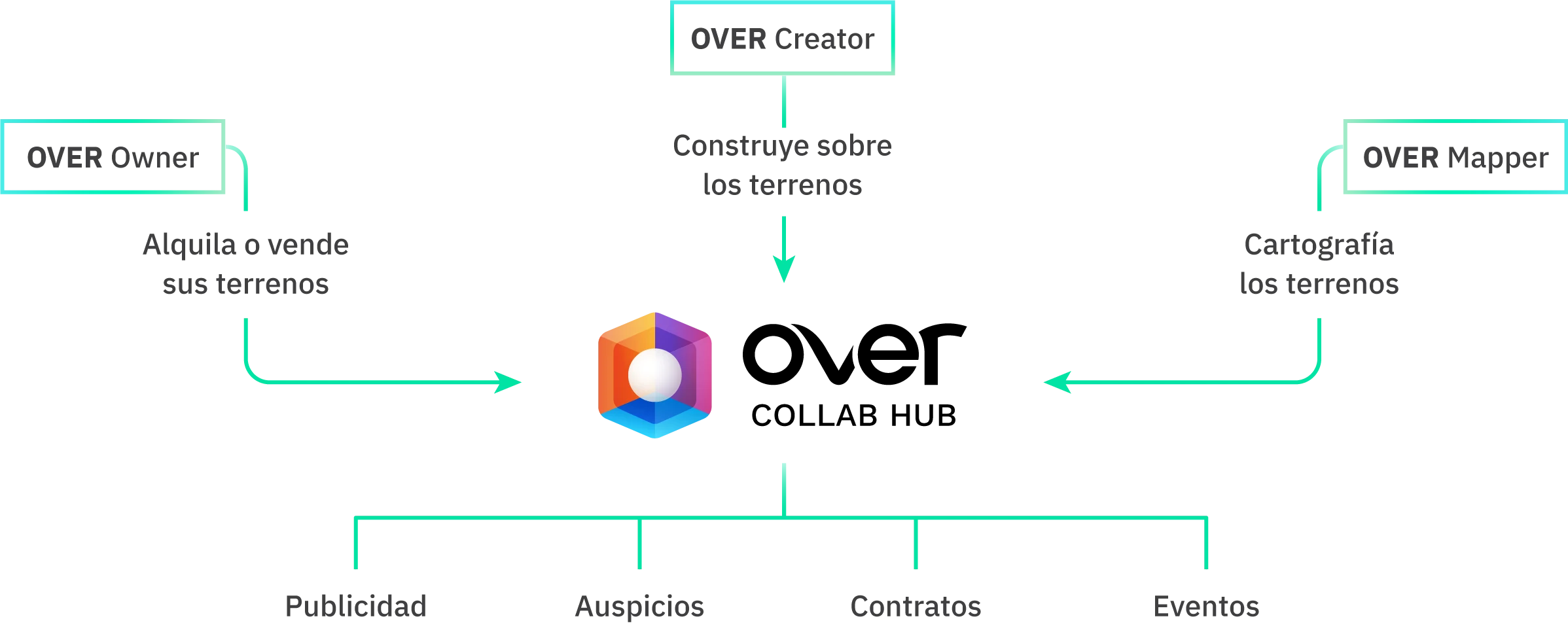
A platform where verified users connect and collaborate, so there are more and better experiences in a social, safe and trustworthy environment.
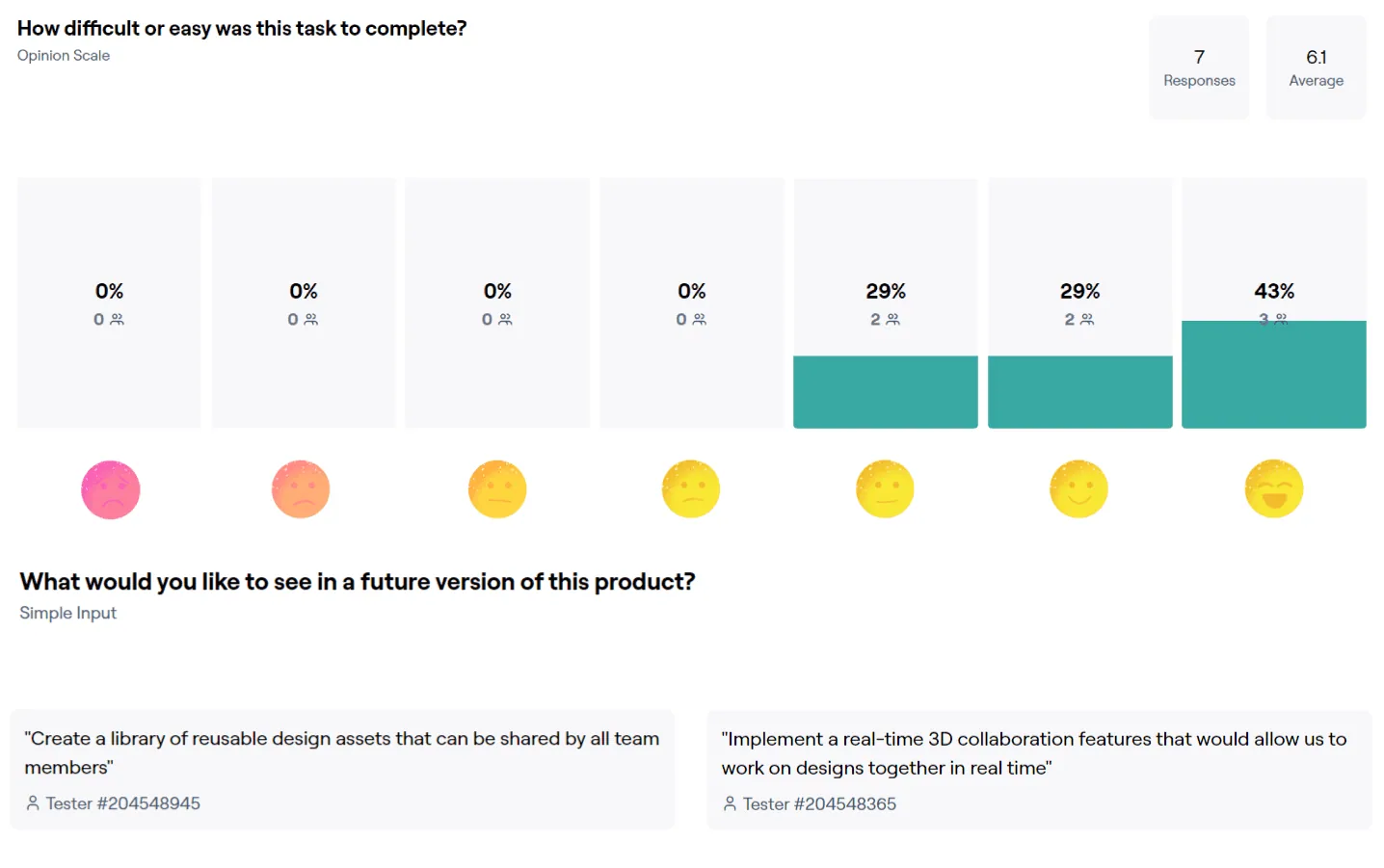
We validated with the community in Maze
First with a high-fidelity prototype with features limited to each task. Results were positive and the suggestions went into the final prototype.
Hover to see the details
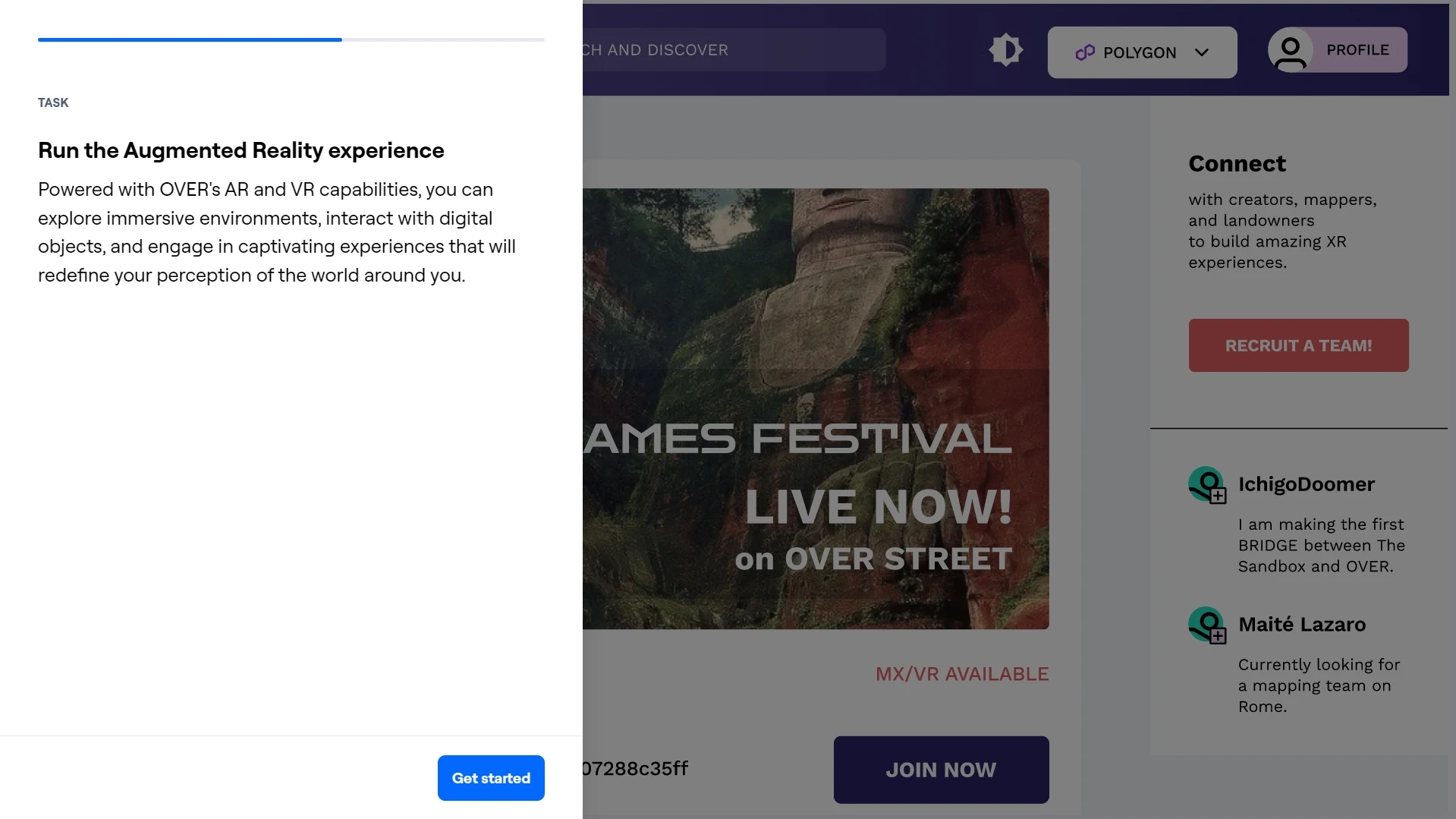
AR and VR immersion button, customizable menu and sidebar, three color modes, notifications, Web3 network switching, «Recruit a Team» pop-ups and posts with more information.
The journey in eight screens
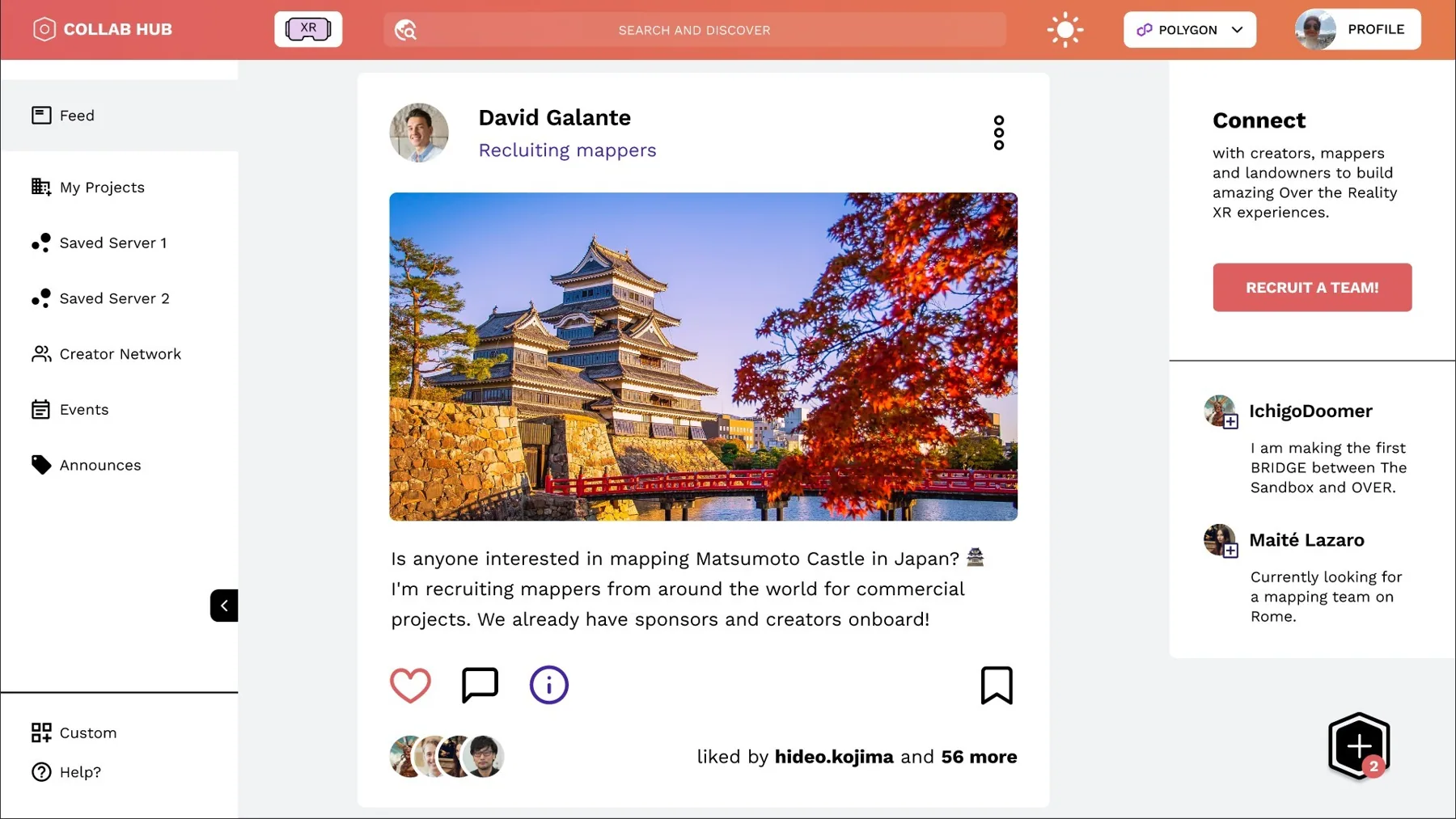
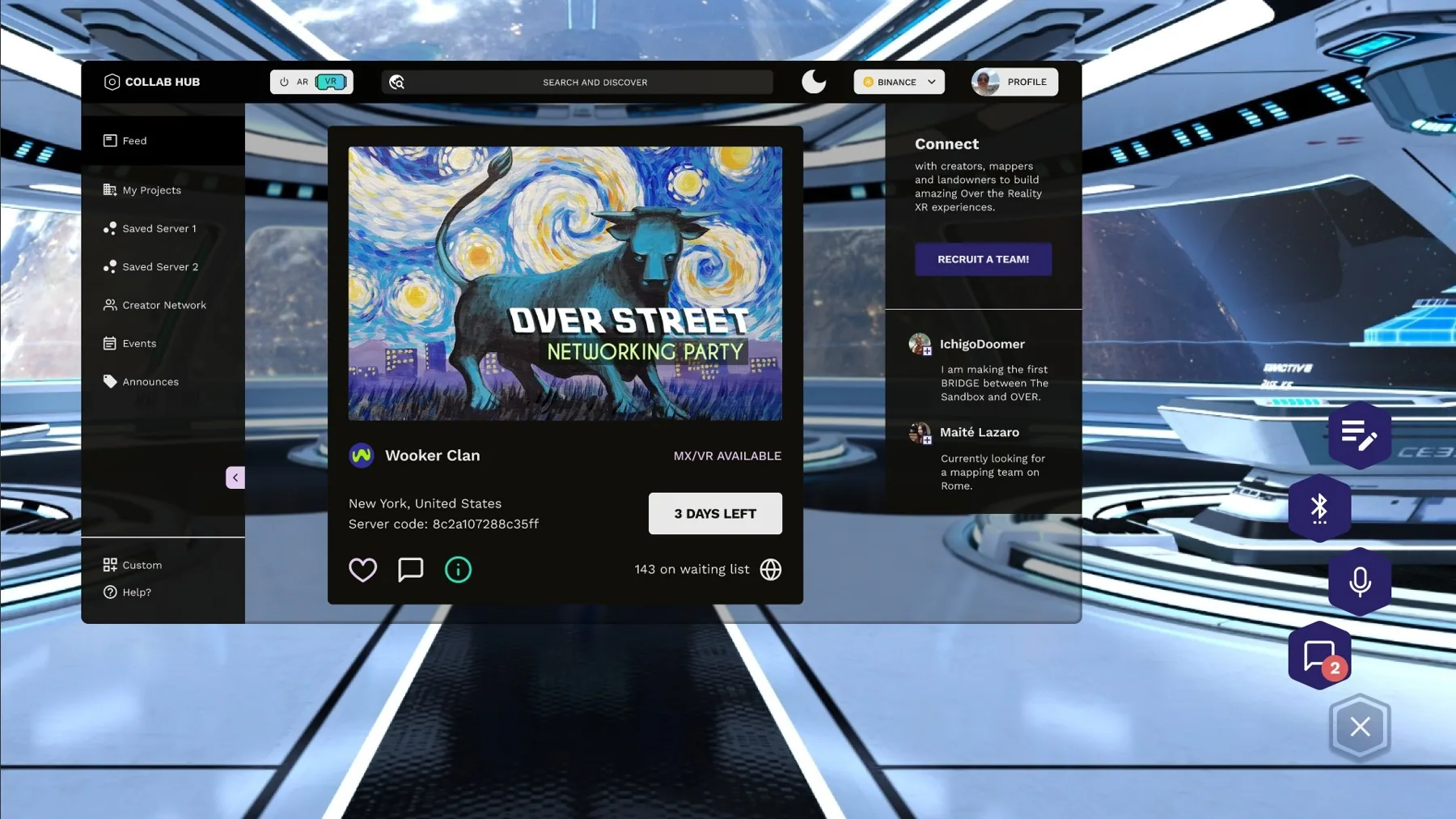
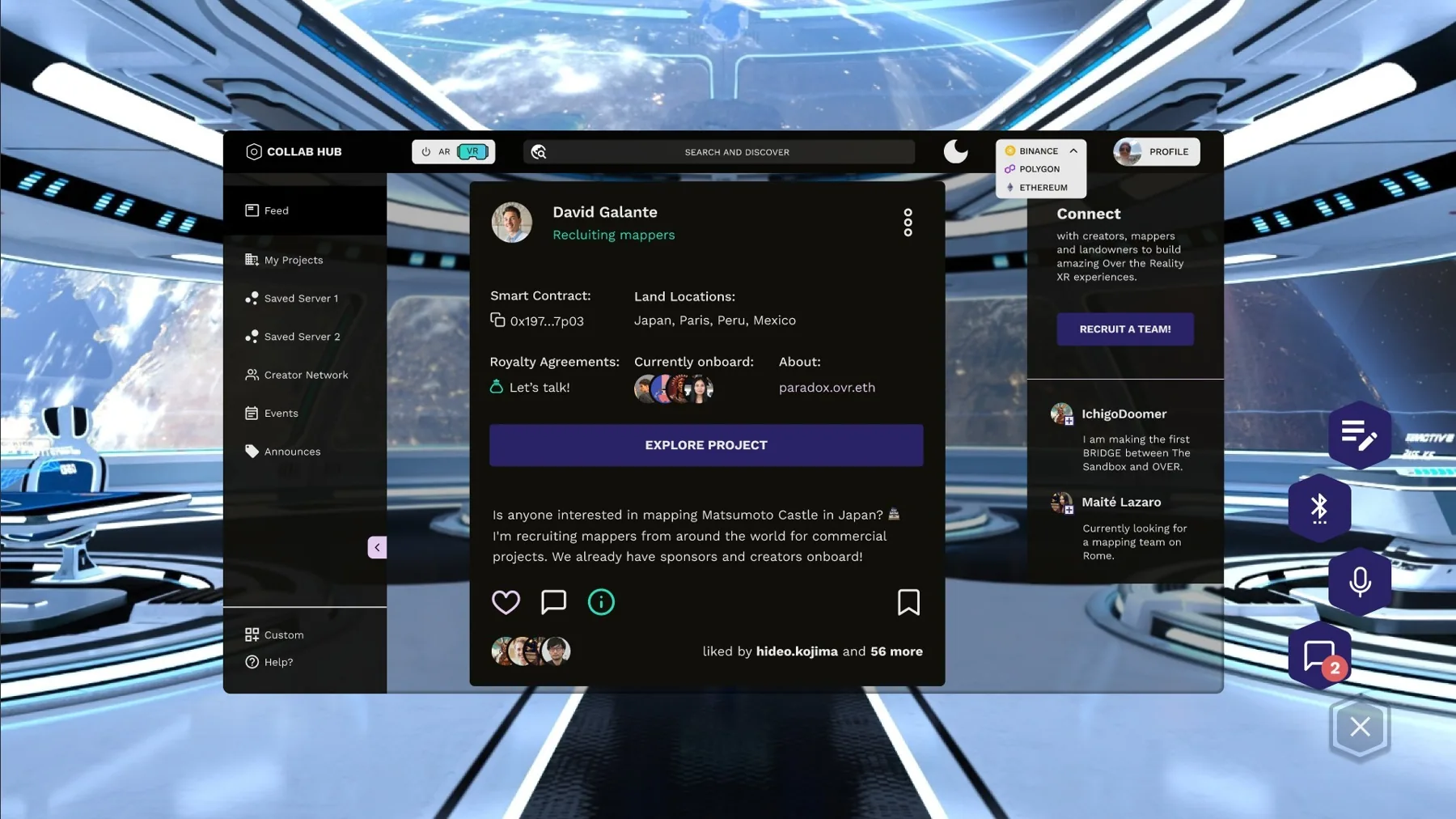
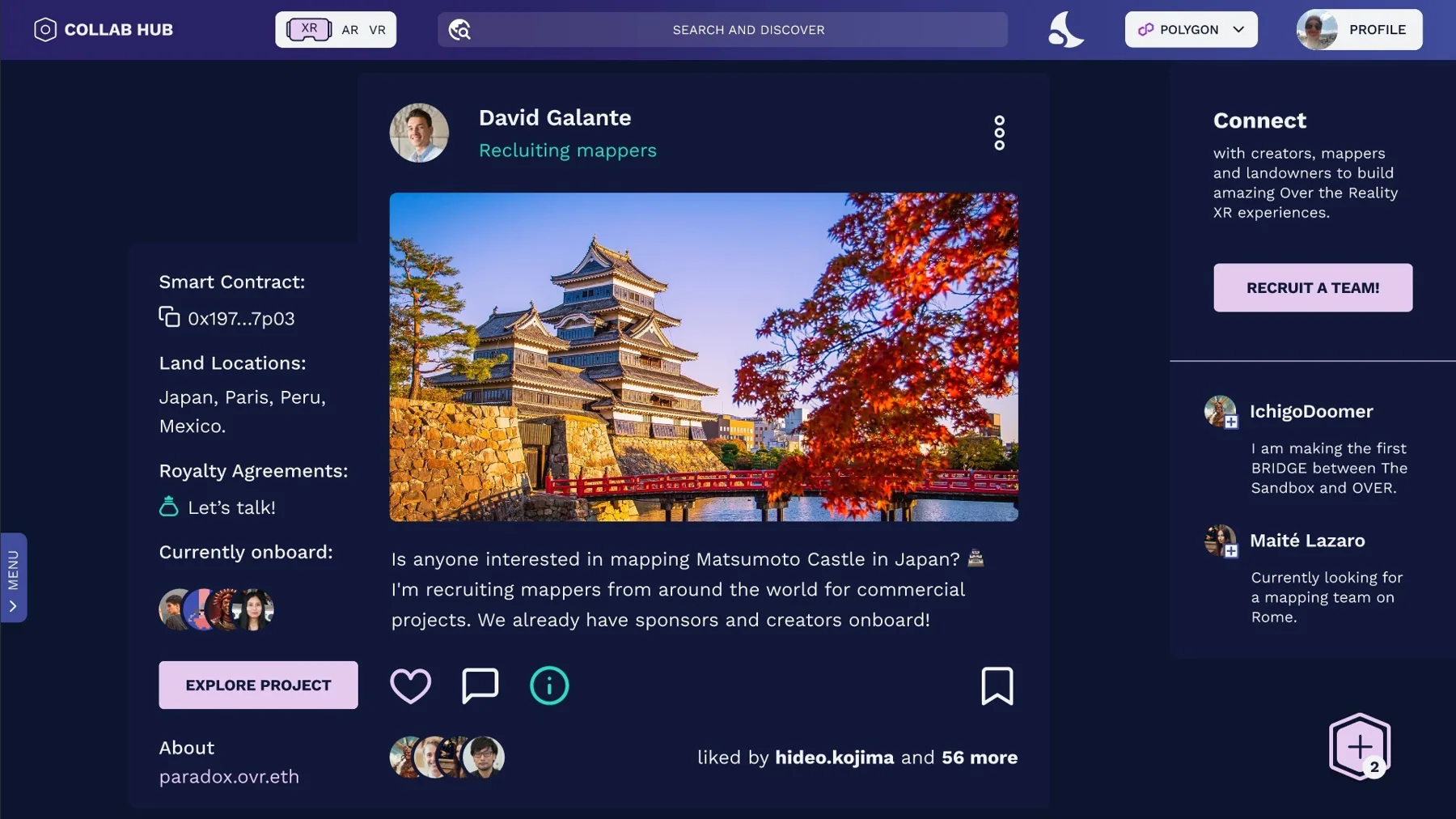
A prototype the community already tested
An interactive prototype validated with real users, with a design system and components ready for development. Later phases remained under OVER's confidentiality.
Next steps and future improvements
New feasibility studies will allow adding features to the prototype. The following updates are confidential.
Spatial design in extended reality still faces accessibility and safety challenges, and lacks the «killer app» to drive it. There is work left to do.